


Beyond Technology: The Human Side of Research Infrastructure
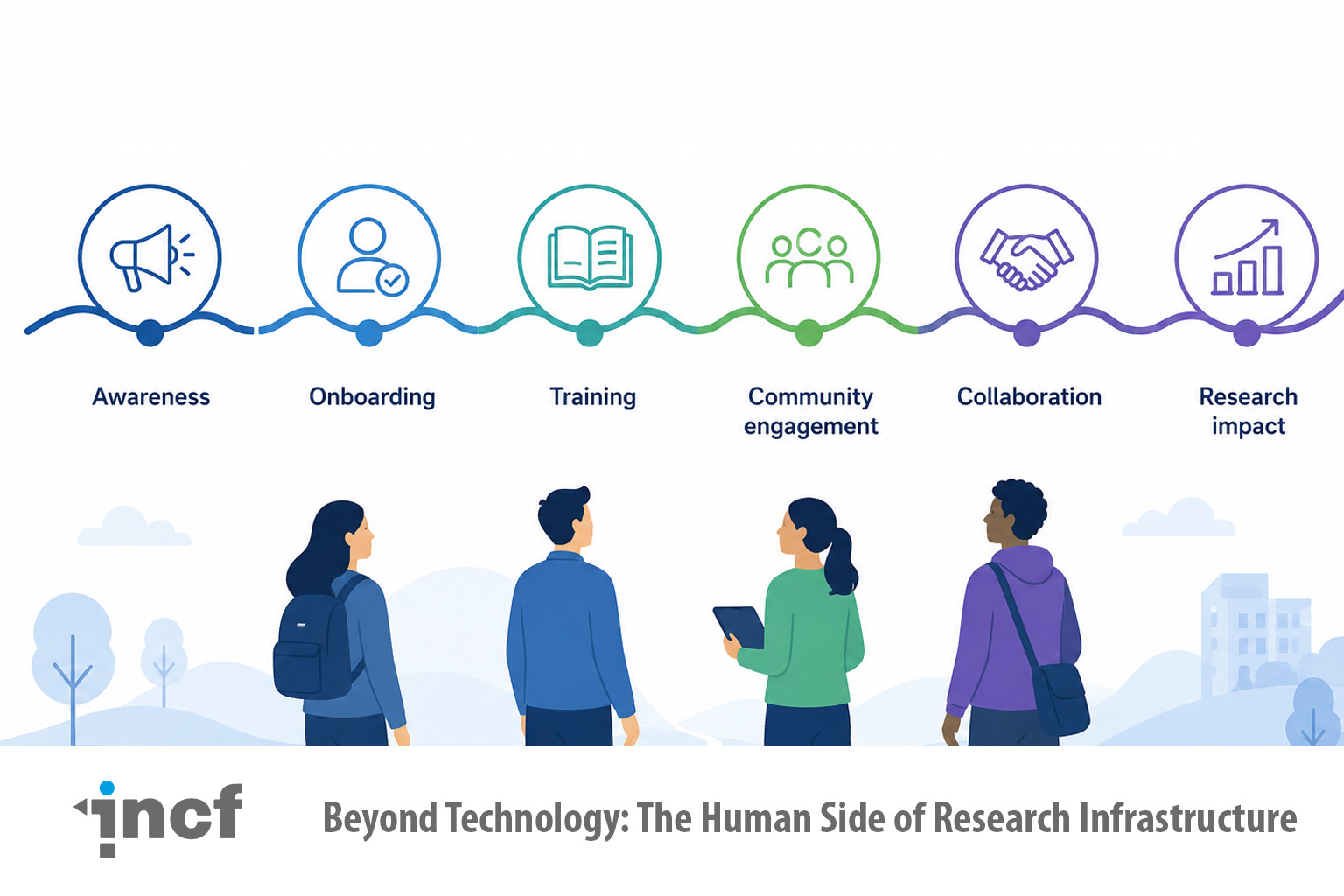
10 June 2026For many research infrastructures, onboarding is often viewed as a one-time event: a user creates an account, attends an introductory webinar, and begins using the platform. Participants at an INCF hosted workshop on onboarding users for research infrastructures in May 2026 challenged this view. Instead, onboarding was described as a continuous process that extends far beyond first contact. Effective onboarding includes awareness building, training, technical support, governance coordination, documentation, community engagement, and long-term user development. Success is not measured simply by registrations, but by retention, collaborations, publications, datasets, educational outputs, and community growth.
While the EBRAINS research infrastructure served as the driving use case for the workshop, many of the lessons emerging from the workshop apply to research infrastructures across disciplines. One of the clearest conclusions was that successful onboarding requires a balance between centralized coordination and local engagement. Participants supported a hybrid model in which core activities, such as standards, documentation, training resources, and support systems are coordinated centrally, while local nodes provide community engagement, contextualized training, and hands-on user support. This approach combines consistency and scalability with the flexibility needed to address local scientific priorities and user needs.
The workshop also challenged traditional assumptions about local infrastructure representatives. Rather than acting as experts in every service, participants emphasized their role as coordinators and connectors who help users navigate increasingly complex ecosystems and access the expertise they need.
Another recurring theme was the need for flexible and scalable training. Research infrastructures serve diverse communities, including researchers, educators, developers, and policymakers. As a result, training resources should be modular, FAIR, reusable, and designed to support users at different stages of their journey.
Looking ahead, participants identified community-driven support platforms and AI-assisted help systems as promising ways to scale onboarding and user support. However, both approaches require long-term investment, governance, and quality assurance to ensure trust and sustainability.
Ultimately, the workshop reinforced a simple but important message: onboarding is not merely a support function. It is a strategic capability that drives adoption, collaboration, and community growth. For EBRAINS and for research infrastructures more broadly investing in sustainable onboarding, training, and support will be essential for long-term success.